
Ryusei Games @R_Game_Official
Ryusei Gamesとは ボードゲーム制作やボードゲームイベントの企画運営、マーダーミステリーの制作、イマ―シブコンテンツの企画運営など幅広く活躍しています。 最新情報はコチラをチェック https://lit.link/ryuseigames お問い合わせやゲーム制作依頼はメールへ ryuseigames@outlook.jp
- 【Publisher Wanted】CYCLE TRICKS — Seeking International Publishing Partners for a Two-Player Trick-Taking Game
- 2026/9/17 16:17
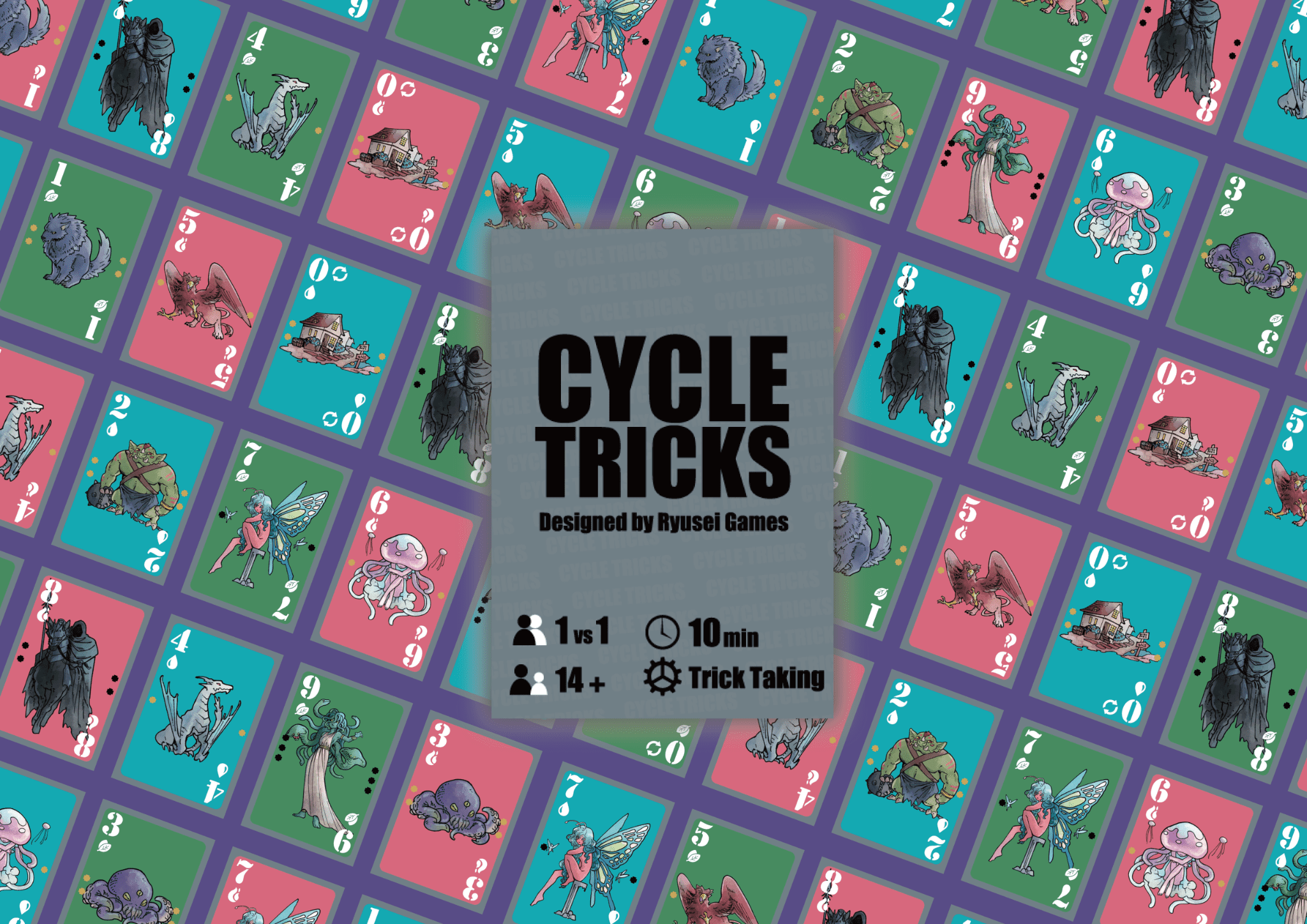
Change what makes a card strong.
Game rule:https://sites.google.com/view/cycle-tricks-rule/english
Hello everyone,
My name is Ryusei, and I’m a board game designer and the representative of Ryusei Games, based in Nagoya, Japan.
I’m looking for international publishing partners for 『CYCLE TRICKS』, a two-player trick-taking game in which players can reverse both the relationships between suits and the strength of card ranks.
The heart of the game is deciding when to change those relationships—and recognizing whether a change will help you more than your opponent.
Players:2
Time:Approximately 10 minutes
Ages:14+
Components:30 playing cards across three suits, numbered 0–9, plus two double-sided cards showing the current suit and rank orders
Mechanisms:Must-follow trick-taking, reversible card strength, positive and negative scoring
Each player has a hand of twelve cards, and the game takes place over twelve tricks. Players must follow the led suit whenever possible. The player with the highest total score from captured cards wins.
The three suits have a "rock-paper-scissors relationship" i.e. Each suit beats one other suit and loses to the remaining suit. When two different suits are played, this relationship determines the winner. When both cards share the same suit, their ranks determine the winner instead.
Both of these relationships can change during play.
Playing a 0 gives you the opportunity to reshape the following tricks. After the current trick has been resolved, you may reverse either the suit cycle or the rank order. Reversing the suit cycle changes which suit beats which. Reversing the rank order changes whether higher or lower numbers are stronger, while 0 remains the weakest rank within its suit.
These changes affect both players, so timing is crucial. A reversal that improves your hand might also give your opponent exactly the opportunity they were waiting for.
There is another important consideration: card strength can change, but scoring values stay the same.
Cards numbered 0–6 are worth positive points, while 7–9 are worth negative points. Taking a trick can therefore increase or decrease your score. A card’s ability to win and its value when captured are two different things.
This creates the central tension of CYCLE TRICKS. You might give up a valuable trick by playing a 0, then reverse the rank order so the low cards you have saved become stronger. You might change the suit cycle to create an advantage for your remaining hand. Or you might hold back, suspecting that your opponent is better prepared for a reversal than you are.
The satisfying moments come from preparing for a change, choosing the right moment to make it, and seeing your remaining cards work together as planned. Meanwhile, your opponent can use their own 0 cards to change the situation again.
The decisions stay closely connected to the other player: which suits they can still follow, which cards they seem to be saving, and which tricks they are willing to take. Every card they play gives you more information, but waiting for that information may cost you the best moment to act.
My design goal is to offer a compact game with a clear central idea and meaningful decisions throughout a short session. The combination of a reversible suit cycle, reversible rank order, and fixed positive and negative points gives players several connected ways to influence the outcome.
I would be delighted to hear from publishers interested in two-player card games, trick-taking games, or small games with strong player interaction.
Thank you for taking the time to read about CYCLE TRICKS!
Ryusei
Ryusei Games
contact me :ryuseigames@outlook.jp